

👋Hi, it’s Matt. This week, I spoke with Jen Schwanke, former principal, current deputy superintendent, and author of Trusted. (Full subscribers can watch the video of our conversation below.) Enjoy! Also, my feedback survey closes soon. If you have a few minutes to spare, I’d love to know more about your experience here. Take care, -Matt
Jen Schwanke has spent her career inside schools as a teacher, a building leader, and now a deputy superintendent in Ohio. She is the author of five ASCD books, including her most recent, Trusted: Trust Pillars, Trust Killers, and the Secret to Successful Schools. She also writes the newsletter “Principal Problems with Dr. Jen” and co-hosts the Principal Matters Podcast, which has surpassed 1.5 million downloads.
In this conversation, Jen and Matt discuss what it takes to lead with trust: riding the inevitable ups and downs of the principalship, delegating without losing accountability, building the self-awareness to recognize when you are undermining relational trust, and staying connected to students when compliance and logistics pull you in every other direction.
What We Discussed
The connection between trust to student outcomes
The difference between being trustworthy and being trust-willing
How to recognize when you are unintentionally harming trust with your staff
What it means to lead through teachers, from the inside out
The area where teachers are most willing to take feedback from their principal
The two things that keep Jen grounded as a leader when the job gets enormous
About Jen Schwanke
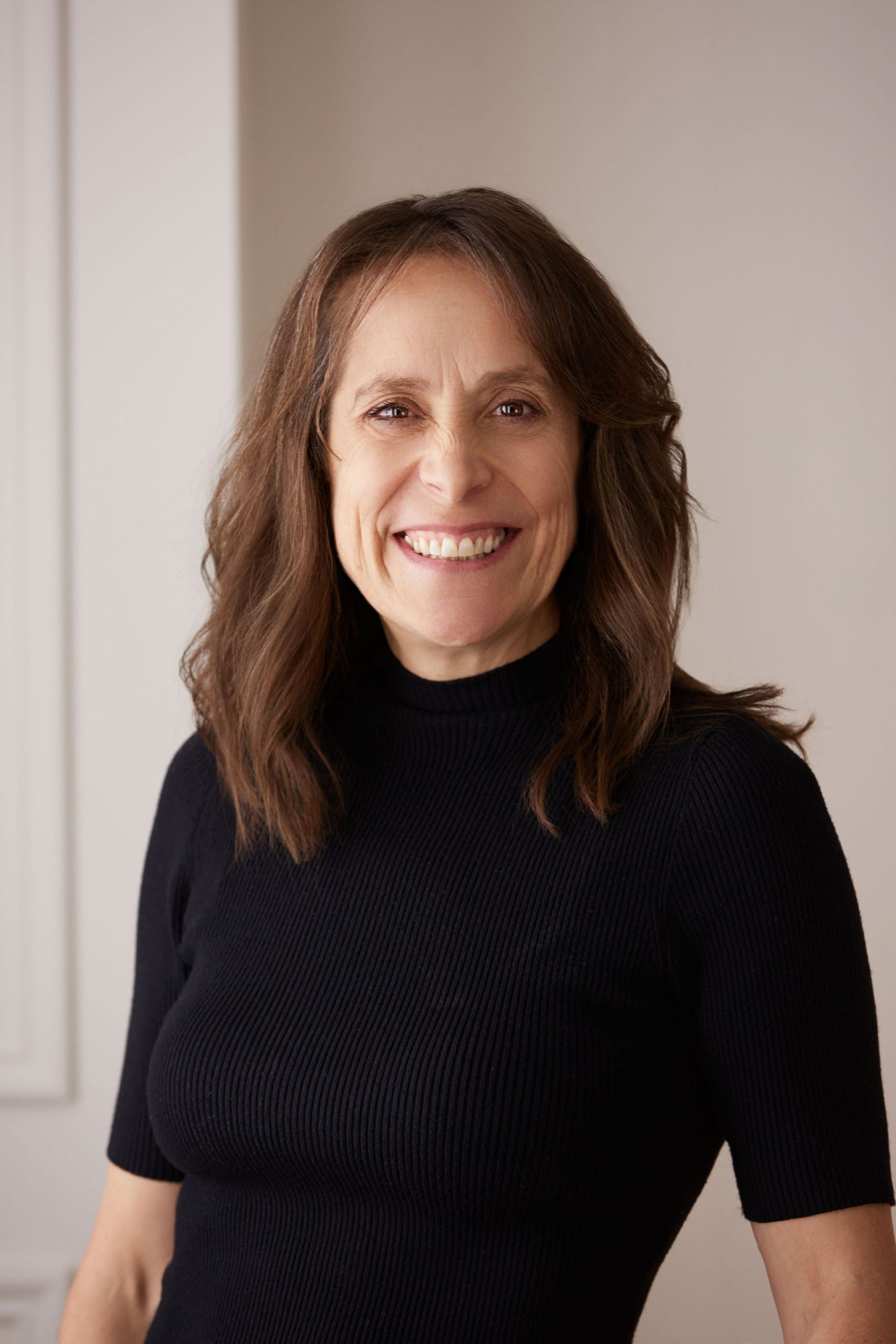
Jen Schwanke, Ed.D., is a longtime educator who has served as a teacher and leader at all levels. She is the author of five ASCD books, including Trusted: Trust Pillars, Trust Killers, and the Secret to Successful Schools. She writes the newsletter “Principal Problems with Dr. Jen” and co-hosts the Principal Matters Podcast. She is an instructor in educational administration at The Ohio State University and currently serves as a Deputy Superintendent in Ohio.
Find Jen at jenschwanke.com, on X at @JenSchwanke, and on Instagram at @DrJenSchwanke.
Resources Mentioned
Trusted: Trust Pillars, Trust Killers, and the Secret to Successful Schools by Jen Schwanke (ASCD, 2025)
Enjoyed this conversation? Share it with a colleague and let us know know in the comments!
Full Transcript
Matt Renwick
Hi, my name is Matt Renwick. I am a coach, former principal, classroom teacher, and I am joined today by a colleague, also a former principal, former classroom teacher, current deputy superintendent, Jen Schwanke. Welcome, Jen.
Jen Schwanke
Hi, Matt, so good to be here, thank you.
Matt Renwick
Good to be connected with you again. I want to read your bio. You’re a long-time educator, teacher, and leader at all levels. You’re the author of 5 books. The last one is the one we’re going to talk about today, Trusted: Trust Pillars, Trust Killers, and the Secret to Successful Schools, published through ASCD. In my review that I wrote for it, for Middle Web, I wrote it was a book that I wish I would have had when I was a principal — it was just really well done. We’re going to talk more about that, but Jen has published 5 books, all focused on leadership at the school level. She’s a frequent contributor to multiple educational publishers, including Choice Literacy, which we’ve both been contributors to and proud writers for. She also consults with districts and school leaders in the areas of school climate, personnel, and instructional leadership. She’s a frequent presenter at national organizations, including ASCD, ISTE, NASSP, and NAESP, and also an instructor in educational administration at The Ohio State University. She currently serves as Deputy Superintendent in Ohio. You can find her at JenSchwanke.com, on X at Jen Schwanke, and on Instagram at Dr. Jen Schwanke. Welcome.
Matt Renwick
What made you decide that you wanted to write a book about trust?
Jen Schwanke
Well, let me tell you a story related to that. I’ve been lucky to have a great relationship with my editor at ASCD, and this book came to life because I had just published one on conflict management for school leaders. The ink was still warm on the press, and I reached out to my editor and said, I want to write one about trust. And she said, Jen, my goodness, be quiet for a minute. And I said, no, no, these things do go hand in hand. Managing conflict in a school, and how you talk to people, and how you try to anticipate and analyze and act on conflict is so tied to trust. So here’s what she said to me: we really need you to come up with something that has a true effect on student outcomes. So anything you write about trust has to be tied to student outcomes. And I thought, I don’t know how to do that. I know how to write about how trust feels and how to not be a jerk, but I don’t know if I can tie it to student outcomes. Then I started doing some research, and I was shocked — I should not have been — I was shocked to find how much of a correlation there is between principal and staff trust and student outcomes. Students achieve more when teachers trust their principal. After that, the book was easy to write, because I was able to really focus on the why, my intentionality with building trust, and what happens with students.
Matt Renwick
I’m glad you wrote it. I’m glad you convinced the editors, because you do get at the student level, and that’s one thing I appreciate about the book and your writing. I’ve read your writing with Choice Literacy, and I’ve been on peer review groups with you. I always appreciate your stories — small anecdotes from your own experience, the ups and downs of the principalship. It’s an interesting polarity: conflict management and trust, those two tensions.
Jen Schwanke
That’s exactly right, because you can’t do one without the other. You and I met, probably 10 years ago. You were doing some writing for ASCD, I was too, and we went to an authors’ retreat together, and where we geeked out together was with the literacy piece — the reading, and the writing, and student engagement. To me, it was a little bit of an aha moment to think about how it really all is tied together, including student achievement and progress.
Matt Renwick
You note in the book that the only way to be successful as a school leader is to learn to ride the inevitable ups and downs. That conflict, and engagement with it, and trust — that’s something I both miss and don’t miss as a former principal. What strategies did you use in your 17 years as a building leader to ride those waves?
Jen Schwanke
I had a little bit of an aha moment. I was probably in my 10th year as a school leader, and I was complaining to my dad about it — about a teacher, or a parent, or a curricular resource, or a data point. He happened to be standing on his skid steer with a chainsaw at the time, cutting down some branches after a recent summer storm. And he said, you know what your problem is? You always think there’s going to be a point where there’s no more problems. You’re always dissatisfied, because there’s always another problem. And he looked up to the tree and said, a storm blows in, you gotta cut a few branches down. It’s just the day’s work. I thought about that for quite some time, and I thought, that has been my weakness as a leader. I’m looking for this moment when there’s no more conflict, everybody’s getting along, everybody understands what we’re trying to do, everybody’s engaged in the learning — and that’s never going to happen. Because we’re humans, and we have feelings and responses. So rather than feel like I’m chasing an impossibility, I found a great deal of peace in thinking, problems are going to come and go. That is literally what I am paid to do. The strategies were, first of all, recognition of that. I have to embrace these problems that come. And I will even say — my team will tell you it’s very annoying — they’ll come in and say, we have this problem, and I’ll say, okay, let’s pause and think about this together. That takes self-discipline. It also takes team. Because if you are alone, and you feel like you’re the only one who’s going to ride this up and this down, it gets pretty hopeless — like going in the ocean and taking another wave, and then another wave, and then another wave. And then perspective. It is so easy as school leaders, as teachers, as coaches, to feel like the things in our bubble are the most important to anyone. We have to make sure that we don’t wrap too much of our identity into the work — meaning letting go of the sense that we have to have everything perfect.
Matt Renwick
That very much resonates with me. Of those things you listed, the one I struggle with most is letting go of control to get things done. As you said, you need others to help lead. It’s the only way to manage it all. What have you found effective to make it clear what’s expected, and how to do things well, so that you’re not trying to do it all? How do we let go of control?
Jen Schwanke
This is something I did not do well at the beginning of my career. I thought that when I got the master key to the school, I needed to put on a Superman cape and be everything to everyone. I needed to know everything, be involved in every conversation, make every decision. And if I didn’t, the whole place would fall apart. I’ve come to know — and part of this was through the research I did in my doctoral program — there’s so much out there about collective efficacy. If, as leaders, we don’t empower our staff, if we don’t say, hey, you got this, or, I need help with this certain thing, and invite those other voices, then the trust and the ability of a staff to let their gifts shine is really diminished. We work with people who have bachelor’s degrees and master’s degrees, and many times we overstep in our assumptions of our own expertise versus saying, hey, you have the expertise. I’ll be honest, to this day, I still have to enact self-discipline and say, Jen, you would not do it that way at all — but the outcome is going to be the same or better if you just step aside. Really, all of this is a synonym for trust. In the book, I make a distinction between trustworthy — which most of us know how to be: be honest, do the right thing, follow through — and trustwilling, where we have to be willing to let other people do their thing, do what they were hired to do, get out of their way, and help and guide them instead of criticize or micromanage.
Matt Renwick
You bring up a good point about the differentiation between being trustworthy and being trustwilling. A step of that is humility — and also self-awareness. You talk in the book about how trust killing can sometimes be unintentional. Principals aren’t always aware of how their words and actions are damaging, both what they do and what they don’t do. How did you create that self-awareness, or how have you seen leaders create it, so they’re becoming more adaptive and not making the same mistakes over and over?
Jen Schwanke
I’m a listener, I’m a watcher, and I watch myself with the most critical eye — but I watch other leaders too, and I watch teachers and coaches and see how they respond to different leadership styles. Self-awareness of when you are undermining relational trust — you can’t measure how important that is. Trust killing is generally unintentional. Nobody wakes up in the morning and says, I really want to ruin some trusting relationships today. But many of us miss the cues that we are undermining that relational trust. Two things I’d like to say about this. The first is a bit of an offshoot of the ‘let them’ theory, which many listeners probably know. Let people feel how they need to feel. That comes with a little bit of tension as a school leader, because we can’t just let people do whatever they want — we have to lead, and provide guidance and standards and expectations. But if we are doing things with sound mind, with thought, with input, with an eye to how it’s going to affect students, then we really have to be able to let some things go. However, we’ve got to have our eyes and ears open for the feedback, because it comes in various ways. If I walk into a staff meeting and no one will meet my eye, or if I’m explaining a new initiative and people are just coming at me with all the reasons it won’t work — rather than thinking, okay, this is a staff that is resistant or toxic or negative, what they might be is scared, or uncertain, or nervous about change. We have to listen for feedback and learn from it. I always look for my truth-tellers, the people who will tell me when we’re getting off track. I also tell people: look for patterns and look for mirrors. If every time you roll out a new initiative or program you’re finding significant resistance, that’s when you look in the mirror and say, I may not be communicating well enough, or I may be leading a group of people so scared of change that they can’t see the potential outcomes. Then I have to backtrack and see how I can fill the holes in the sieve so that my leadership intentions are not seen as barriers, but as potential for the future.
Matt Renwick
The need for feedback and having your truth-tellers around you is crucial. I was married to one of my truth-tellers. She was a special education teacher in the same building where I was the principal, so if I screwed up, I learned about it very quickly — which I appreciated. And she knew how to approach me in the way I needed to hear it, so that I actually would.
Jen Schwanke
Let’s talk about that for a minute. Your wife was a truth-teller, and she probably saw things you didn’t see — and there you were, trust-willing. Willing to listen to her, willing to say, where am I going sideways? I’m certainly not saying we all should be married to our truth-tellers, but we need to trust that they don’t want us to fail, they don’t want to bring us down. There’s no ill intent when people try to give us feedback. We can choose to say, thank you, that’s very helpful, let me think about that — or we can choose to say, we’re moving forward. The first one is the only way that you build trust.
Matt Renwick
How do you get to that level of intimacy — in a relational sense — so that no matter what happens, you’re still going to be on good terms with each other? I think that’s a barrier in people’s minds, though it may not always be correct. They think this is going to destroy the relationship if I have this conversation, and it really is not, unless something truly egregious has occurred. I didn’t love the story, but I really connected with the story in the book about when you walked into the lounge and heard some teachers talking about you. If I remember right, you didn’t respond in the moment. You kind of walked away and found a custodian’s closet and...
Jen Schwanke
Cried.
Matt Renwick
I think we’ve all been there. If you’ve been in the principalship long enough, you’re going to catch that at some point. That’s just the nature of the job. It made me think about the principal as an outsider — how we have to lead through teachers, from the inside out. You pushed back on that a little, and I appreciate that, because you don’t think of principals as outsiders, although oftentimes principals do think of themselves that way. Especially teachers who become principals in the same building — they see the shift in relationships right away, just from that positionality. So I guess the question is: how do you balance being somewhat of an outsider with needing to lead the building and maintain those relationships?
Jen Schwanke
In the past, many years ago, the principal was very far removed from the day-to-day intentionality of a school. The principal was there to handle discipline, the facilities, maybe suspend kids when the teacher couldn’t or was exhausted. Now, principals are in the muck with instruction, classroom management, and professional development — things that were never the original job of a principal. I understand why it’s still in the DNA of some teachers and principals to think of the work as separate. And of course it is, because the principal is the boss at the end of the day. But the most ideal version of the model is if the principal is the one in charge, but with a team mindset. This goes back to that collective efficacy piece. If a principal thinks of him or herself as an outsider, there’s something wrong there. Outsider is different from leader. Leaders should not be outsiders. Leaders should be in the work. In schools, everybody is talking about everybody else — that’s just human nature. We spend an exorbitant amount of time with the people we work with in our schools. It’s okay if people have complaints or feelings or want to talk about the principal. But we want people to know what we’re trying to do. And by the way, sometimes the negative talk is exactly what you want. There was a teacher I once called to task for the tone she used when talking with children. It was really upsetting. She had been doing it for a decade. I finally heard an interaction with a very young child that shook up the child and even me. I went to her and said, we’re done. We’re not going to talk to kids like this anymore. She marched right to the lounge and said something along the lines of, can you believe she’s insisting I be nice. Well, her colleagues may have nodded along, but deep down, they were applauding me. Many of them came to me and said, thank you for taking on this long-running problem. The things people say — we’re never going to eliminate that. We want them to say things like, I trust her, she’s fair, she follows through. I sure don’t like this PD she’s rolling out, but I see what good it’s going to do for kids. Those are the kinds of lounge conversations we want had about us.
Matt Renwick
I love that example. If you’re going to have a candid conversation with someone and you’re going to upset someone, upset the right people — the people who need to be nudged to improve — and you’re right, the other teachers are going to quietly applaud. They may not come to you and say thank you, but yes.
Jen Schwanke
Respect and loyalty deserve a place in this conversation. Sometimes somebody might say something disparaging about the principal that makes the principal feel like an outsider, but that might be one of your most loyal teachers, saying something to a colleague because they don’t like a decision. And that’s okay. We want that collegiality among teachers, where they can talk things through. And then if something’s a real problem, you’re probably going to have a truth-teller who comes and says, hey, do you have a few minutes? Can we talk about this initiative you’re rolling out? Respect and loyalty on both sides make for a very strong school culture.
Matt Renwick
Everyone’s responsible. I remember coming into my last school, and there had been 6 principals over the past 10 years. I knew trust was going to be an issue. I learned from Anthony Muhammad — the Solution Tree PLC approach — a concern form. Teachers would fill it out: rate the concern 1 to 5, describe what the concern was, what they’d tried to do so far, and what they would like me to do. They’d give that sheet to my assistant, who would enter it into a form anonymously. My assistant would still know who submitted it, so it wasn’t character assassination, but it gave teachers an initial avenue to communicate with me. And eventually, similar to what you’re saying, they just eventually said, I trust them, I’m just going to come and talk to them. That’s a great sign — they trust that you’re going to be respectful and loyal.
Matt Renwick
This is always a challenging one: trusting teachers professionally, their professional knowledge. You note in the book that they are the experts, and trusting them means not questioning their knowledge. I wanted to push back a little. I’m strong in literacy — not an expert, but I know it well enough — and there were times when I did know more than some teachers. How do we approach that, especially if we haven’t taught at the grade level they’re teaching, but we know we’re right and there may be some errors in thinking?
Jen Schwanke
I just talked about this this morning with the Ohio Association of Secondary School Administrators, leading a talk on instructional leadership. I appreciate your pushback, because you’re right: there are times a principal might know more in terms of content knowledge, but that’s generally only going to happen if it’s in your area of expertise. As teachers, we are masters of one subject. Many times, leaders — and I would say this is true for instructional coaches at the beginning — we go in, and I remember when I first went into a science classroom, I thought, I’m going to have to evaluate science? I don’t know math? World language? Over time you begin to understand what to look for, but most of us will never truly understand the depths of content that someone with, say, a master’s degree in that content will have. What we do tend to know as leaders is instruction — what good instruction looks like. And we know what engagement looks like. What leaders need to tease out is this: if I see something inaccurate and damage will be done to a student, I need to step in and correct it, of course. But many times, especially in today’s classrooms, learning is about discovery. Unless a teacher is presenting inaccurate facts and then testing kids on them, it may be part of a journey a student is taking instructionally. We might be able to ask questions about the intent of the content, the intent of the instructional model. The other thing — and I do talk about this in the book — there’s been research on what impact principals actually have when they evaluate instruction. There’s only one area where teachers are really willing to change, and that is not content knowledge, not facts so to speak, but classroom environment. They will listen to their principal about that: where we seat kids, how we manage behaviors, how we set the routine for the class. That is the only thing that moves the needle. So as leaders, that’s what we should focus on. What does it feel like to be in the classroom? How do you manage how do you assess kids? If you went out and lined up 100 students pulled off the street and asked what they remembered about school last year, none of them is going to say, I really liked the day we broke down the Pythagorean Theorem. What they’re going to say is: I liked it when my teacher was kind to me. I liked the day we got to bring Gatorades to school. I had fun when we did that lab. They’re going to talk about experiences that were feeling experiences, not fact experiences. As an instructional leader, I try to look for ways to approach not necessarily the teacher’s knowledge, but how they’re teaching, not necessarily what they’re teaching.
Matt Renwick
You could go in almost as a student yourself during non-evaluative visits — learning walks, instructional walks, whatever you want to call it. I recall teachers saying, can you pay attention to so-and-so? I want to see how they respond to instruction. These were teachers I had a good degree of trust with, and you’re right — they wanted to know the response to their instruction. They were open to that feedback.
Jen Schwanke
I have a new idea I’m teasing out and working on with some groups — a rise theory. My belief is that all of us as educators have four needs. We want relationships: people we connect with, whether students or colleagues. We want an identity: to be known as something, to have a thing — maybe the fun teacher, maybe the tough teacher. We want success: to feel good at what we do. And that ties to the last one, which is efficacy: we want to feel like we’re making a difference. When I work with teachers, I don’t get hung up on factual knowledge or accuracy so much as whether they’re feeling that rise. How can I, as a principal, help them feel it?
Matt Renwick
I don’t want to go too far here, but it sounds like a potential book down the road.
Jen Schwanke
I do want to write that as a book. I have to trademark it, because I believe it’s a human need.
Matt Renwick
I love it. I have one more question, and you’ve already touched on this: students care about being challenged, being seen, and fitting in. I’ve heard that from parents too, and from kids themselves, so it really does check out. When we get buried in logistics and compliance — and you do a great job in the first chapter of listing all the ways the job has become quite enormous — how do you stay grounded in those values, those principles of challenging kids, seeing kids, helping them belong? What grounds you as a school leader?
Jen Schwanke
There’s a balance. Imagine a scale, and there are two things that help me stay grounded. One of them is consistency — being the same leader every day. Having expectations and accountability that are what they are, but every day being student-centered, being visible, being available. And then the other is being immersed in the work. I have never, ever regretted putting down my pen, closing my laptop, and going to get immersed in a student activity in a classroom, on a field trip, at lunch, at recess. I have never regretted that. There have been times I didn’t want to. But when I make myself do it, I always think, why don’t I do that more? Consistency and immersion are the two things that keep my scale balanced.
Matt Renwick
Those are huge trust builders. Thank you, Jen, for talking with us. The book is Trusted: Trust Pillars, Trust Killers, and the Secret to Successful Schools. If you’re a new principal, if you’re looking for renewal, I would recommend it to anyone in leadership — and beyond the principalship. These are good lessons for coaches, superintendents, anyone in those kinds of positions. Thank you, Jen. This was great.
Jen Schwanke
Thank you so much. I appreciate it, Matt. We always have great conversations.


