
The Library Book Budget Project
On empowering educators to address their own challenges
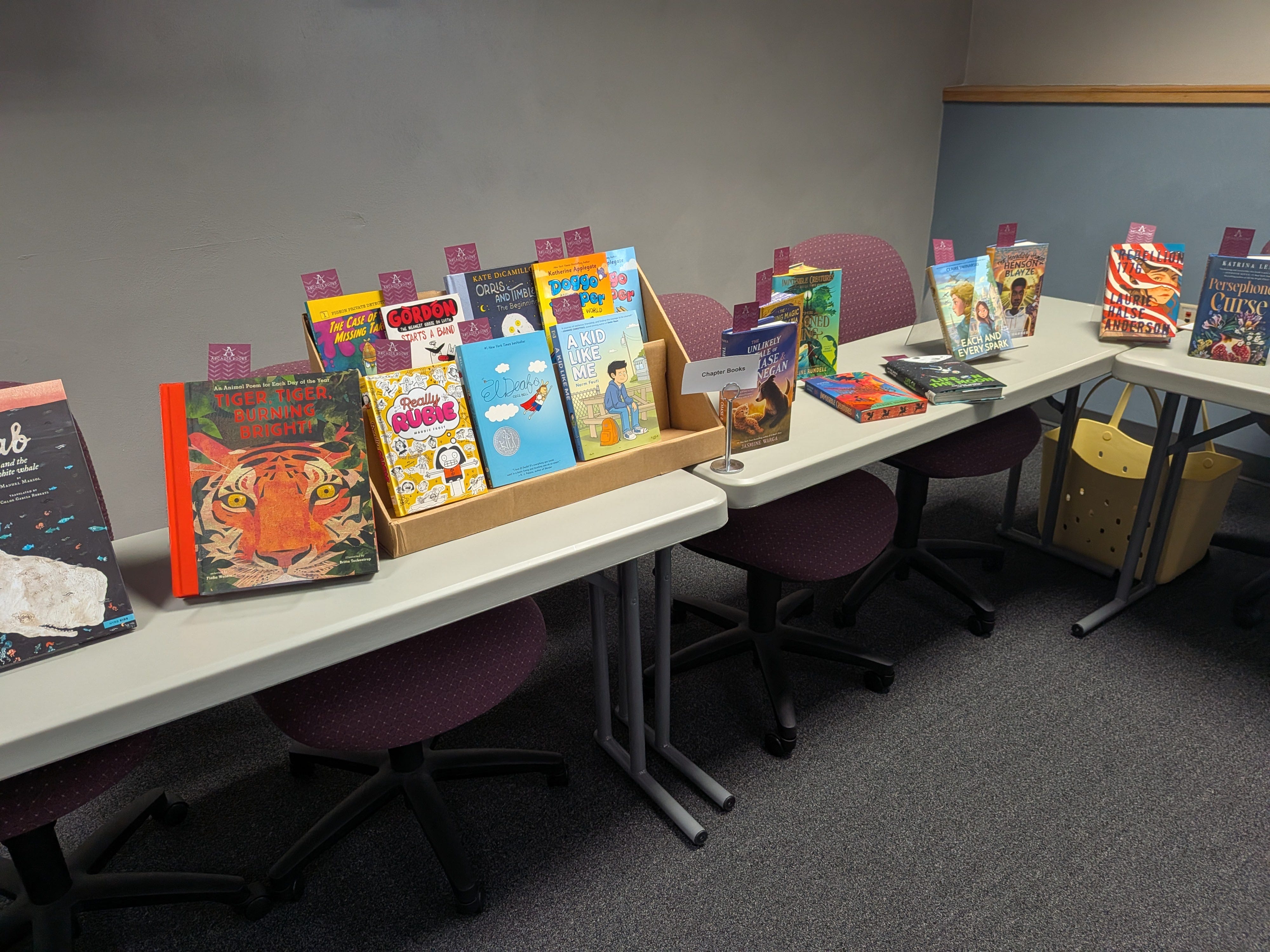
"The blessing is next to the wound"
- Old African proverb
On Monday, June 22, 2026, eleven teachers and library media specialists gathered on a summer afternoon to select books for their students and respective libraries. Each educator would receive an allocation of money to purchase texts with their students.
Why they gathered went beyond free books. One 5th-grade teacher said she couldn’t get a student to read a full book until the end of the school year. “He was so proud that he finally finished one.” She had scoured garage sales for used books the previous summer, having moved up from the primary grades. “Hopefully, with this project you won’t have to spend your own money on books or wait all year to find the right ones,” I noted. Other educators talked about having more money in their budgets now for basic classroom supplies.
Beyond Books and Budgets
The goal of this project goes beyond giving educators and students financial support to purchase books for their libraries. The Library Book Budget Project aims to empower them as influencers and leaders in their respective schools. When students and educators are given the authority and the trust to shape their own learning and that of others, they model courage and agency.
This project is a direct response to the external mandates on their literacy instruction and learning environments. Reading is becoming more isolated, lacking both in context and in connection. Literature is nice-to-have, replaced by excerpted or contrived texts. Little time is available for kids to talk about what they are reading. It’s the same for teachers. They have become so busy implementing bloated programs that there is little energy left for professional reading or conversation with colleagues.
This group of educators is now a network. They have each other’s email addresses. Everyone introduced themselves and explained why they were there. Their mere presence together had an impact. One teacher commented that “it is nice to know that I am not alone in facing this problem of authentic reading experiences disappearing from schools.”
Book Buying as a Context
This sense of camaraderie was observable when the group finished reviewing the project toolkit and headed to another conference room, where three independent bookstores were set up. Pure joy is how I would describe what I felt being in that room with these educators. Smiles, along with “Oh, my kids would love this book,” accompanied the flipping of pages.
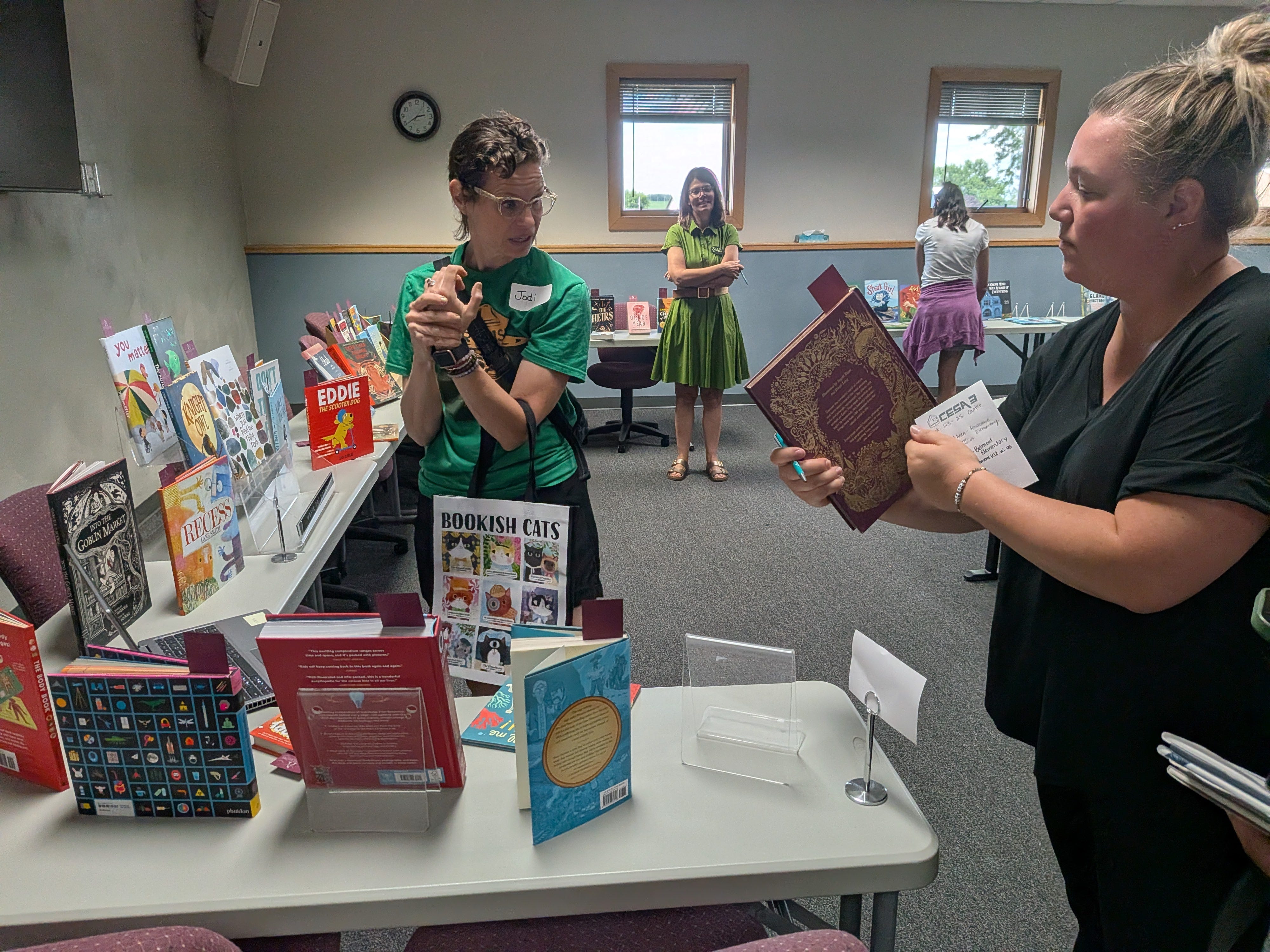
Some educators were unsure where to start. “There are so many to choose from!” commented one teacher. A library media specialist asked me how many books they should buy for their project launch, before getting student input. I shrugged. “I don’t know your kids as you do.” They appreciated the trust, even as they sat with this discomfort in abundance.
Inviting local booksellers to partner with schools aligns with the belief that trust is a driver of growth, not just an outcome. The educators could buy books without getting their principal’s permission. That is no small thing. All the participants had to do was check a box that said their administration was on board with the project. Trust was intentionally built in before anyone walked through the door.
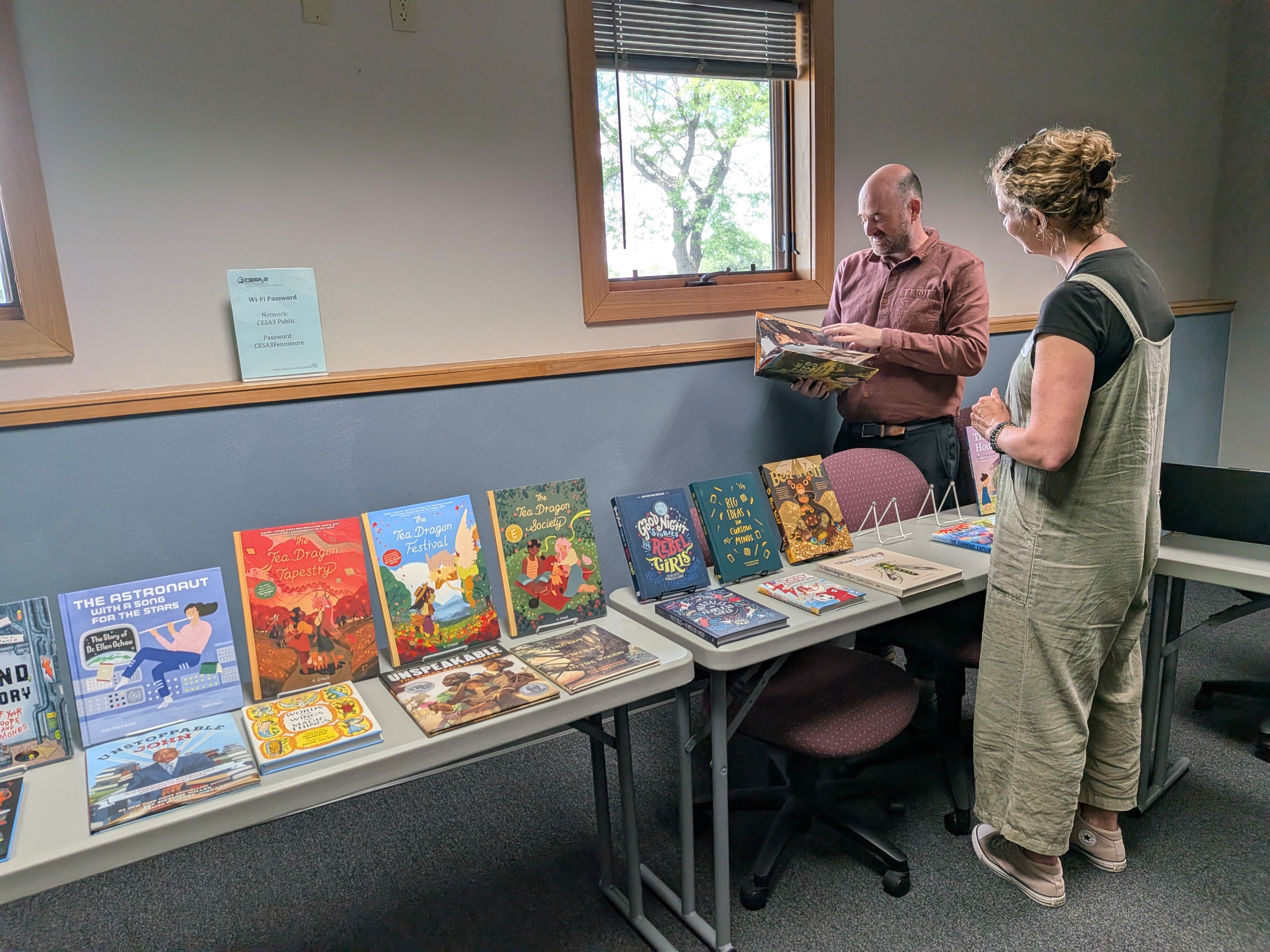
There was also a natural trust between the booksellers and the educators. The latter knew that the former wanted one thing: good literature in kids’ hands and minds. There was no ulterior motive, such as raising test scores. Plus, booksellers have more time to read what’s available and make wise recommendations.
Coordination: The Invisible Structure
This project goes beyond providing a community of readers and leaders. Coordination creates the conditions for teacher learning and student learning to inform each other. It’s often invisible, gets little limelight, and is essential for providing the structure for professional growth and change.
During our yearlong networked improvement community1, each session will open with consistent rituals: reviewing agreements, reading the network's principles, sharing updates, and making space for educators to tell stories and pose questions to the group. A standing feature will be book blurbs highlighting texts by authors and characters of color — books that were available at the kickoff but weren't readily selected; this data will shape the network. Educators outside the network will be invited to speak about how they empower their students, offering ideas such as teaching kids to make book trailers for new titles. Clear demonstrations will address the practical work: setting up a data plan, navigating policy, and guiding students to organize and manage their own library.
I will stay with this concept of coordination for a while. It can be seen as boring, for example, to follow a consistent routine for network meetings or auditing a library. At a deeper level, coordination also means releasing some of the most joyful parts of the educational experience to others. For example, if students are expected to select books for their respective libraries, where does that leave educators? It requires reframing our source of joy, instilling a greater sense of humility, and being a witness to students’ successes to create the conditions for mutual growth. What we can gain is increasing our influence by doing less and allowing our students to build their identities as readers.
Enjoyed this post? Please share it with a colleage and on social media!
I posed the following two questions to this group of educators. You are invited to reflect and respond as well in the comments.
Where in your school do students have a genuine voice in their reading lives? Where is that voice missing?
What would you have to release, e.g., control, curriculum, or an assumption, to treat students as leaders in their own reading lives?
There is a name for what we are trying to build. In Learning to Improve: How Schools Can Get Better at Getting Better (affiliate link), Anthony Bryk and colleagues define networked improvement communities, or NICs, as a community “organized around a shared theory and shared measures for its central concepts. The central concepts of a NIC are the key drivers that comprise this theory, and practical measures are associated with each.” Besides coordination, key drivers for the library book budget project’s shared theory are family and community engagement, strategic use of data, and collaboration. Shared measures will likely be check-out rates, engagement surveys, and reading achievement scores. I will share more about these theories for improvement in future posts.
This is in reply to your questions:
1. Where in your school do students have a genuine voice in their reading lives? Where is that voice missing?
2. What would you have to release, e.g., control, curriculum, or an assumption, to treat students as leaders in their own reading lives ?
In schools that prioritized Independent Reading, students were given a well-thought-out balance of guidance and choice in their reading lives. Sadly, students' voices are now missing in most of the schools I see. If Independent Reading does take place, it is now independent reading (no capitals), meaning that students might have time to "read when you are finished with this required work from the curriculum." The teacher is not able to devote time to conferring.
2. The answer depends on the teaching scenario, who the "you" is:
Scenario 1:
If teachers are used to being in charge of what, why, and how students read, and they are now allowed to act with agency, they will have to rethink their beliefs. When teachers make the shift to treating students as leaders in their own reading lives, they shift from seeing themselves as the holders of knowledge to seeing themselves as facilitators. They need to trust that the students do, indeed, want to read.
Scenario 2:
Administrators need to treat teachers as professionals, let go of controlling what teachers teach every minute of the day, and let go of the notion that curriculum is meant to be followed day-by-day because each classroom is the same. Administrators need to shift their thinking about teachers, allowing them be the decision maker in the classroom.
I could go on....
This is DrSam7. I will be posting this in my Read All About It blog post this week. Good luck with the project.