What I learned eavesdropping on a book club in Green Bay
On the classroom as a third place for readers
Last Sunday, I worked my usual shift at our local independent bookstore. June is surprisingly a slower month for sales. (Nice weather? Graduation parties?)
To improve traffic, the owners created a bookshop quest. Participants travel to one of the 35 participating stores to receive a stamp. Ten stamps = one free audiobook.
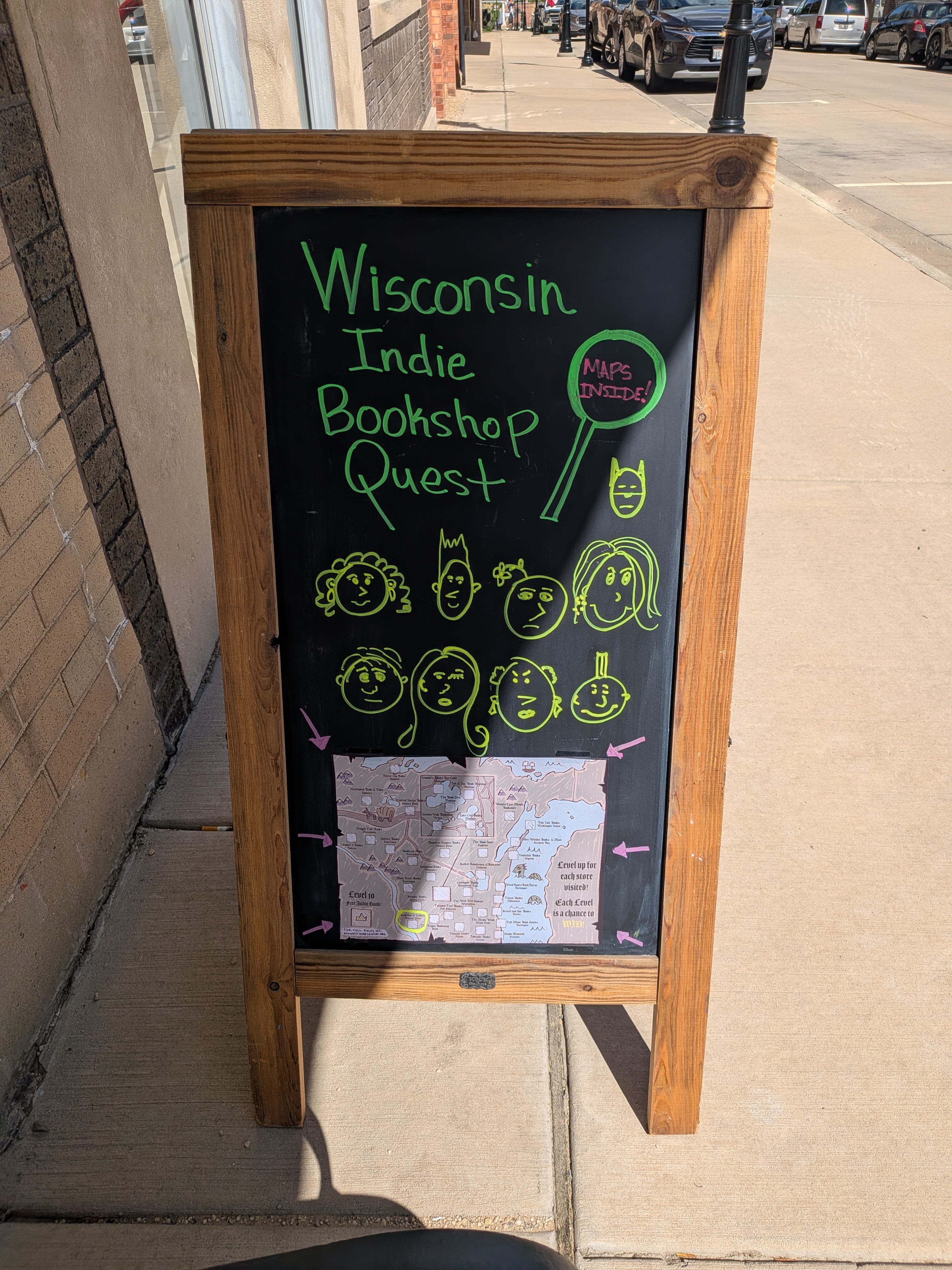
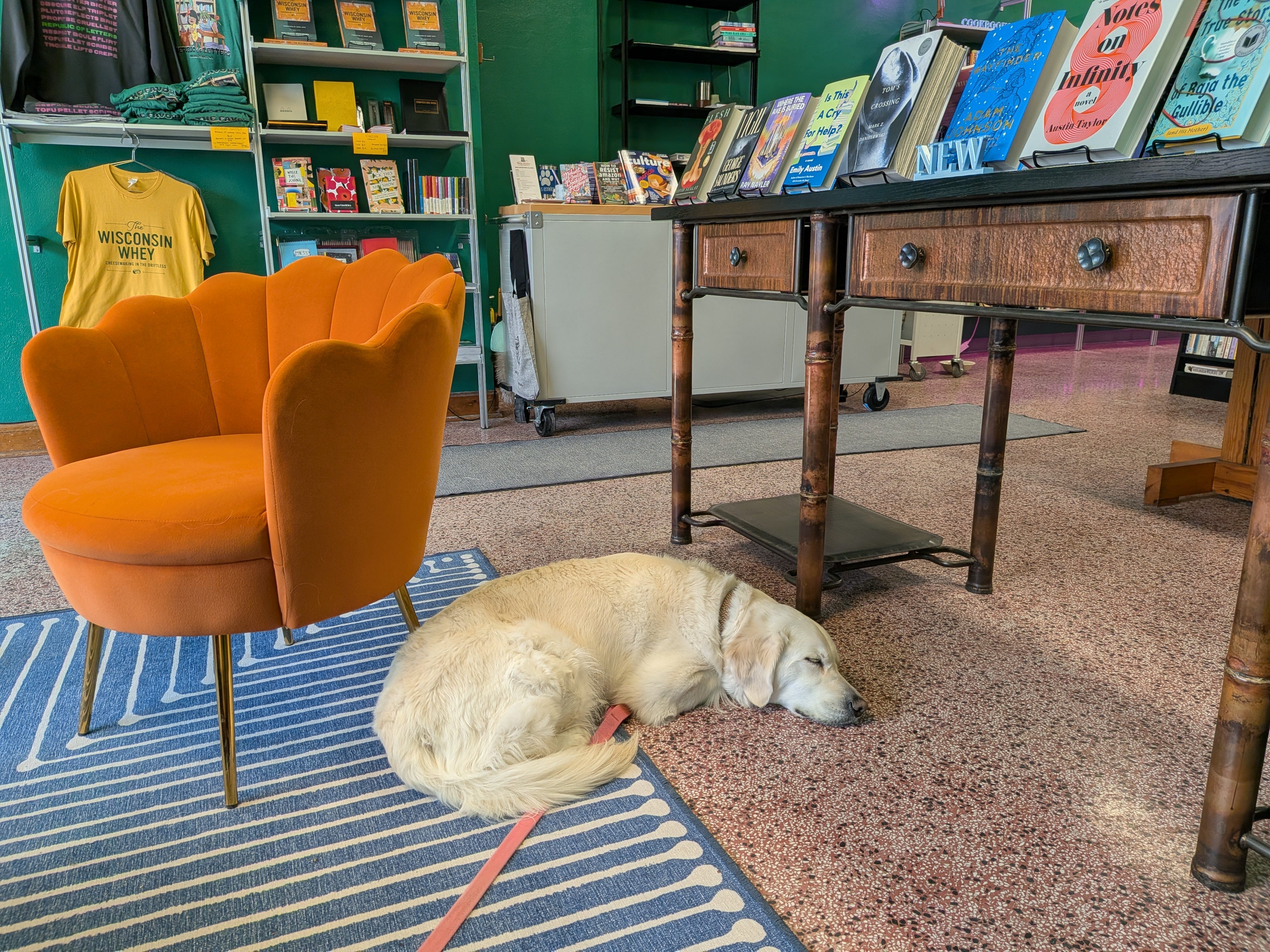
There are also bonus stamps for additional prizes, such as for bookstores with pets.
I was surprised by the number of people who came in with their bookshop quest maps with at least ten stamps. They were visiting two to three stores a day. They were making a day of it with a friend or on their own.
My initial theory was that they just love books and reading in general. This was an excuse to share the love! But I also wondered, why do I visit bookstores when I travel?
I did just that on a recent work trip to Green Bay. While colleagues were figuring out dinner, I found an independent bookstore downtown. When I walked in, a book club discussion was happening. I quietly walked around this sacred circle, locating myself in the back of the small store. I eavesdropped on their chat while looking at their shelves. This was a BYOB club: bring your own book. No required title to read. After they each introduced themselves (followed by an enthusiastic “Hi, _____!”), they shared what they had been reading, why they chose these titles, and what they were reading today. Once everyone shared, they sat quietly in their circle and read.
I learned that this space was more than a bookstore. It is what sociologist Ray Oldenburg refers to as a “third place”, a location “outside of home and work (one’s first and second places) where friends and strangers can gather unrushed — like cafes, bars, hair salons, dog parks and gyms.”
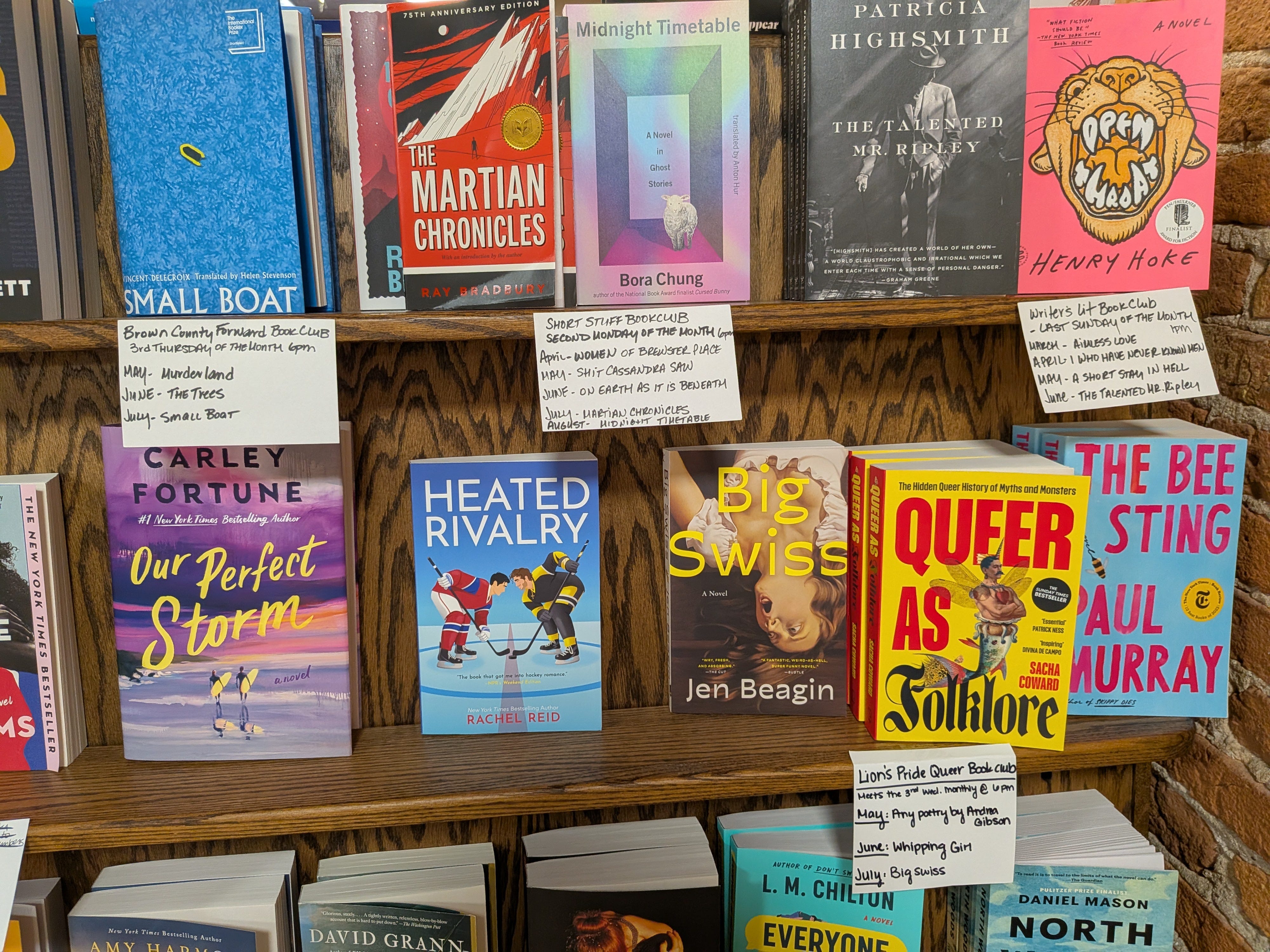
I found artifacts of this bookshop as a third place beyond the circle of readers. In the back, the sellers devoted several shelves to the upcoming book club picks. There was something for everyone. If I lived in Green Bay, I would join the “Short Stuff Bookclub”, a good fit for my busy life right now.
I continue to think about Oldenburg’s definition of third places:
· They are on neutral ground and promote social equity by leveling the status of guests.
· Conversation is the main activity and the mood is playful.
· Strangers are welcome, and there are regulars who feel a piece of themselves is rooted in the space.
· They enjoy the same feelings of warmth, possession, and belonging as they would in their own homes.
What I realized is that too many of our classrooms, where we are tasked to literally raise readers, are anything but a third place. Students are assessed and sorted with reading screeners before teachers have time to really get to know them. The mood is growth, sometimes at the expense of accessing other elements of school, such as physical education or the arts. Families and community members have to complete background checks to volunteer in or even visit a classroom. Some of this is driven by the Science of Reading (SoR) movement, which does not include joy or belonging as part of its advocacy work. (There is nothing scientific about disconnected reading.)
This is why I have continued to pursue an understanding of what a truly effective learning environment looks and feels like. What I have discovered is that building an appreciation for reading is important. Teacher book talks and read alouds are and should remain mainstays.
Additionally, students have to be readers. They have to embody every aspect of the reading experience. For example, it’s not enough to have voice and choice in what to read; students also need to be involved in the selection, curation, and organization of the books available in their respective libraries. Related, a strict protocol for facilitating classroom discourse limits opportunities for students to immerse themselves in conversation with peers about what they are reading. When we position students as authorities in their reading lives and as influencers on their peers, they see the impact they have on each other. They build a sense of agency and, ultimately, an identity as a reader. Identities are shaped by the social context in which one lives.
What’s the pathway to agency and reader identity? In a word: empowerment. Merriam-Webster defines empowerment as “to give authority or power to”. This can feel like a scary proposition for teachers and leaders. It involves trusting students to make choices about what to read, sometimes not what we would recommend. It involves allowing students to shape the learning environment to what works for them, which doesn’t always work for us. It’s about honoring students’ rightful presence, moving beyond inclusion, where the adults are no longer the only ones who decide which voices are heard and whose stories are included in school.
As you can imagine, this pathway to student agency naturally conflicts with an educational system that is designed to achieve certain outcomes.
Is there a middle road here? Is it possible to achieve both ends? I believe so. This journey can begin by asking students about their experience as readers and writers in school. What’s worked for them so far? What hasn’t, and why? What would they like to see going forward, for themselves and for peers? These are basic questions that I believe students at any level, K-12, can answer, provided that the person asking the questions has a genuine desire to learn. Student voice data like this can be the impetus for a learning environment that truly supports the development of a third place for readers.
Here is what a third place in school might look like:
· No teacher-directed reading groups for the first month or so of school. When possible, group students based on self-selected interests, and not levels. (Also, refrain from sharing assessment results with the students from the fall screener. Why shape a reader’s identity by one test score?)
· Position the text as the central point in student conversations. Start by modeling civil discourse and gradually releasing responsibility. Ensure high-quality, interesting texts are being used. It’s tough to talk about a book no one likes. Seek joy vs. compliance.
· Invite students’ families and community members to visit the learning space. (Work within your district policies.) Have them witness an engaging and joyful discussion about a book that students selected. The visiting adults will take what happens in the classroom with them to their own homes and community spaces, an extension of that reader community.
· Start and end the literacy block with recognition and reflection. Hold brave spaces for students to celebrate together, and to share with their peers what’s working for them and what’s not.
How have you created a third place in your classroom or context? If you are moving toward this type of experience, what first step do you have in mind? Please share your thoughts with this community. (Comments are now open to all readers, thanks to feedback from you.)
Enjoyed this post? Share it with a colleague and on social media!
What I’m Reading
This Substack post by Terry Underwood, PhD summarizes the origin and evolution of reciprocal reading, from its evidence-based approach to its “lethal mutation” we sometimes see today. It’s a good example of how educational systems too often shape the spirit of a teaching approach to a reductive set of steps that leeches the joy out of teaching readers. His post also demonstrates how instructional practices in general are difficult to spread and scale without losing their effectiveness, along with the importance of site-based professional learning.
“The active ingredient is the teacher’s responsiveness. No script can specify when to push a student to clarify, when to let a confident-sounding wrong answer ride for a minute to see if a classmate catches it, when to take the turn herself to model what skeptical engagement with model output looks like.
The teacher who can do this work is doing the same work Palincsar’s teachers were doing with Sara in 1984 — hosting a novice inside a discourse she is gradually internalizing, increasing the demands one stage further into the zone of proximal development as the novice becomes capable of more.”
Quotable