
What Matters Isn't Always Measured
On Junk Journals, Emergent Practices, and What We Can't Package
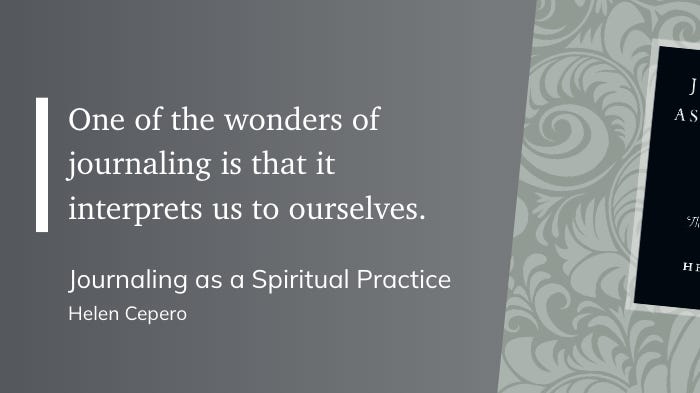
One of the truisms in education is, a lot of what works for students in schools is nothing you can buy or prepackage. Some of the most powerful practices emerge organically from teachers’ own creative lives.
A recent example of this in action was during a curriculum acquisition meeting. I along with another coach/consultant were working with a secondary ELA team. Our focus for the day was reviewing one resource for possible adoption.
To start the morning, I read aloud an excerpt from The Book of Alchemy, a creative journaling guide. The passage selected touched on how our values shape what we choose to bring into our lives and the lives of others. The question: “How might your values guide you toward your vision as a school?” was posed to the team, along with time for quiet reflection.
After that, I walked the team through a few assessment points. Like other schools, students from historically marginalized groups were overrepresented in their below proficiency and chronic absenteeism data. The initial root causes for these outcomes were a) lack of supports at the universal level of instruction and b) student engagement.
We reviewed one ELA resource being considered through these lenses of universal level of instruction and student engagement, along with a comprehensive curriculum checklist. During a break, one of the teachers brought out a notebook. “What you read this morning reminded me of what I do every afternoon with my students before dismissal: junk journaling.” She opened up the cover and shared a few pages. She had pasted photos in one spread along with a description of what each image meant to her. Another spread included a kind note from one of her students she had taped to the paper. “I have a dozen girls coming into my 8th period prep time and journaling with me. They love it.” This teacher shared how two students who couldn’t join the group due to other commitments were excited to have their own journal to write in on their own time.
“You do this on your prep time?” the principal asked. “Oh, I don’t mind,” the teacher noted. “I am journaling anyway; they just do it alongside me.” She then shared another story: one of her students was recently hospitalized. When she looked at her ID bracelet, she announced to her family, “I can put this in my junk journal!”
When Journaling Works (and When It Doesn’t)
Watching the teacher share those pages, I found myself thinking about what makes journaling practices like this actually effective—and what curriculum developers face when trying to include them in packaged programs.
These kinds of engaging, relevant activities are often not included in commercial programs because a) they are hard to measure, b) harder to explain and implement, and c) require the teacher to be a writer: vulnerable, open to judgment, and okay with the messiness of imagination and reflection.
And yet isn’t this exactly what students need: time to be creative, reflective, and get uncomfortable with uncertainty?
In The Notebook: A History of Thinking on Paper1, Roland Allen highlights research by James Pennebaker. This researcher studied when journaling was and was not productive for individuals. In one study, he observed no difference in positive outcomes for habitual diary-writers compared to their peers. In other words, merely keeping a journal—documenting your daily actions and thoughts on paper—doesn’t typically lead to improved mental health or other benefits. In fact, repeatedly recycling unhappy events and memories without reinterpreting them can lead to more stress and anxiety: you are revisiting those negative experiences without any tools to process them.
Fortunately, Pennebaker discovered specific journaling practices that do lead to positive and beneficial outcomes. As he puts it, “Writing is really beneficial when things are unknown, they’re complicated.”
Gratitude journaling – writing down what one is thankful for, including everyday items and experiences as well as finding the silver lining in seemingly negative situations.
Structured journaling – either during or after writing what’s on one’s mind, taking the time to process one’s emotions, naming them and thereby making them easier to manage.
Expressive / meaning-making journaling – writing “when things are unknown, they’re complicated” in order to explore what happened, why it mattered, and what might come next. The goal is to find insight and create meaning, not just to recount events.
In Pennebaker’s work, junk journaling would likely fall under expressive or reflective writing—journaling used to process emotions and make meaning when situations are uncertain or complex, rather than to simply record events.
My Own Practice
I recognize these patterns in my own journaling routine, which I’ve developed over years of trial and error.
Most mornings, I wake up, read a short essay or passage, and use that as a prompt for my own expressive writing. The topic introduced in the text becomes an object for me to relate to with something in my own life. I’ll even make up my own prompts based on the reading. It takes me about a page to discover some type of insight that wasn’t there before I started. Through writing, I engage in meaning-making. Understanding is not just a goal for reading!
During the day and into the evening, I use my bullet journal to document how I spend my time and track the habits I want to build or maintain. I don’t spend a lot of time on this; just enough to create awareness around my actions, thinking, and emotions. It helps me stay grounded and not let anxious thoughts “take the wheel” as I navigate life. Before I go to bed, I reflect by reviewing my daily log and answering three questions:
Where did I succeed?
What did I learn?
What am I grateful for?
This type of reflective writing could be a fourth type of journaling: value-based journaling. When I examine my journal at the end of the day, I am reviewing whether my actions align with my values: who I am, what I believe, who I am still trying to become.
Researcher Jennifer Eberhardt finds that examining our actions, thoughts, and emotions through the lens of values can help students and anyone develop a stronger sense of self and connection to others.
“It helps kids see themselves in a better light with their identity. They have a greater sense of belonging because they feel seen and teachers are less biased because they look past categories or labels when they are aware of kids’ values.”
Psychotherapist and educator Kristin Lee suggests expanding beyond just values as the only lens when engaged in reflective journaling. For example, what strengths am I developing? What contributions am I making? How am I cultivating relationships based on generosity and reciprocity?
All of these opportunities for growth through a journaling practice seem like a natural fit for schools. Social-emotional learning has become not just a priority, but an embedded part of the learning experience in many schools. Facilitated with knowledge and care, academics and behavior could improve through this influence.
Back in the Classroom
Some of these ideas were floating around in my mind as the teacher shared about her journaling practice. I asked if I could make a suggestion. “It would be an interesting study, to find out what if any impact this practice might have on these girls. For example, do you think their attendance has improved since junk journaling with you? I imagine this type of communal, real activity is motivating for them to wake up every morning and come to school.”
But I didn’t push it. What matters isn’t always measured. And for now, I think the teacher is simply exploring this practice with her students and letting it evolve together is all the evidence they need at the moment. This is how emergent practices work: they need protected space to develop, teacher autonomy to experiment, and time to reveal their value. Journaling is a medium for reflection and expression. Hopefully the outcomes will either affirm their goals or reveal the need for more support.
All links for books are to my affiliate account with Bookshop. Support independent bookstores!